Friday, 13 December 2013

No Country For Old Men Review.

No Country For Old Men Review.

No country for old men is an America crime thriller. The film is follows an ordinary man who is trying to lay low after he discovered a case containing ALOT of money after a drug deal went horribly wrong.


Analysis of the opening scene.

During the opening scene we see that it is set in the desert. This creates a huge sense of loneliness as all we see is a vast spread of empty desert land with no sign of civilisation, just the trooper and the villain. It also puzzles the audience as we do not clearly see his face; when he is in the back of the police car all we can see is a black silhouette.

The non-diegetic sound (voice over of the sheriff) tells us a story of his time as a sheriff. He tells us how the crime has become worse and that you are risking your life, everyday. This could create a sense of bravery for the sheriff and also create a sense of fear towards the villains.

The costumes of the characters immediately show us that the film is going to involve illegal events and maybe some trouble with the police. The air canister prop will make the audience think as you would not necessarily associate as a weapon.

The main character - Anton Chigurh.

Chigurh is a hired hitman who seems to have no emotion or remorse for his actions. It would seem that he gains some kind of satisfaction from killing people and intimidating people. He also could be seen as a psycho by some of this actions. For example, when he goes into the gas station and tells the owner to guess what side the in would land on in order to decide his fate. His main weapon of choice a captive bolt pistol which he uses not only to kill people but to shoot the locks from doors. There is a huge sense of mystery about him as he does not speak much. We create our own opinion of him through his actions and appearance.

Wednesday, 4 December 2013

Sound.

Sound.

Diegetic sound.
Diegetic sound is sound where the source is visible on screen or where the source is implied to be present via the action in the film, e.g. voices of characters, sounds made by objects in the story and music coming from instruments in the frame. Diegetic sound can either be on-screen or off-screen depending on whether or not the source is within the frame. Another term for diegetic sound is 'actual sound'.

Non-diegetic sound.
Non-diegetic sound is sound that is not visible or not implies to be present via the action within the film, e.g. narrators commentary, sound effects added for dramatic effect and music/soundtracks/mood music. Non-diegetic sound is also known as 'commentary sound'.

Parallel sound.
Parallel sounds are sounds that match the scene, e.g. a happy scene may have the sounds of laughter within.

Contrapuntal sound.
Contrapuntal sound is the opposite to parallel. This would be sound which does not match the scene. If we was watching a happy scene, we would not genrally hear rock/emo music.


Thursday, 14 November 2013

Mise-en-Scene.

Mise-en-Scene.

Mise-en-Scene is a french work which refers to everything that can be seen via the camera in the frame/shot. The mise-en-scene is made up of five main features: settings & props, costume, hair and make-up, facial expressions and body language, lighting and colour and finally the positioning of the characters/objects within the frame. Many professionals help to create each part of the mise-en-scene, however, the director is the one who overseas all of it's elements.


Firstly is the settings & props. Settings and locations play a huge part in the making of the film and are not just the 'backgrounds'. Sets are either normally built from scratch or the film creators in charge have to spent a huge amount of time in order to find a set that is both efficient and all ready built. The settings can manipulate the audience as they will create their own perception of what the film may be about when really it is the complete opposite.

Costume, hair and make-up almost instantly tell us what era the film is set in and also what society/culture it is based around. Their appearance of the character will give us an indication of status/job and personality. Certain costumes can also signify certain individuals, e.g. a red nose for a clown.


Facial expressions and body language clearly show the audience how the character is feeling. However, depending on the surroundings/costume/music we could get the wrong impression. For example, if we see a character smiling whilst covered in blood with scary backing music, he in fact may not be happy but just disturbed. Body language will indicate how characters feel towards one an other and show how the feel about the situation in which they are in.

Position of characters & objects within a frame can draw out attention to an important character/object. A film maker/directer can also use positioning to indicate relationships and between characters.


Colour can carry certain connotations and add meaning to a scene. It can give a scene a particular mood/feel. Colour can also be used for dramatic effect. For example, if the scene portrays the colour red effectively, this could add an effect of death/danger. Lighting can be used to highlight importance within characters or objects within a frame. For example, a character could have shady lighting on him to emphasis ones mysteriousness. Lighting can also be used to show a characters mental state/hidden emotions.


The Birds Review.

The Birds Review.

The Birds is a horror/thriller movie directed by Sir Alfred Hitchcock in 1963 starring Rod Taylor, Tippi Hedren and Suzanne Pleshette. 
When a wealthy San Francisco socialite decides to pursue a potential boyfriend to a small Northern California town in order to drop off a ‘gift’. Things slowly start to take a very bizarre change for the worst when all kinds of birds decide to attack/strike back at innocent civilians. Causing a lot of damage as they come back in increasing numbers proceeding to get more viscous every time.


 Perhaps the most memorable scene in the film was when Lydia finds a dead man in his room with his eyes pecked out. This scene was filmed with the '3 shot' technique. This is where each shot gets closer and closer to the action, this technique is used to emphasise a certain aspect of the frame and also captures and holds the viewers attention.


Psycho Analysis Review.

Psycho Analysis.

Psycho is a film directed by Sir Alfred Hitchcock during 1960 starring Anthony Perkins, Janet Leigh and Vera Miles. 


Office worker Marian Crane has had enough of the way her life is going. The only time she spends with her lover same is during lunch breaks, and they can not get married as Sam has to give most of his money away in alimoney. One day when Marion is trusted to bank a very large sum of money, $40,000, she sees the opportunity to start a new life. She seizes this opportunity and decides to make away with the money hoping never to be seen again. Marion decided to drive to California to meet her lover at his workplace, but it had been a long day and she decides to stop of for the night at the Bates Motel.

This motel however is not owned by a normal, friendly hotel owner. It is owned by a complete psycho that can be perceived as a quiet, lonely young man (Norman Bates) who is ruled by his mother who lives with him at home.


This man has a complete split personality and at times, takes the role of his mother, who in fact is dead. When he becomes his mother, he has the mindset of his mother. Norman's mother did not like him communicating with girls so when Norman 'becomes' his mother, s/he decides to kill Marion. This murder is during perhaps the most popular scene of the film, the shower scene. This is as we see a silhouette of a woman, which we would assume is Norman's mother, but in fact is Norman himself. This scene alone includes 77 camera angles and  includes 50 cuts! Baring in mind this scene is only 3 minutes long!

Marian sister, Lila and boyfriend Sam are concerned about her disappearance and decide to call an inspector (Arbogast). Which later results in him being killed as his questioning has Norman suspicious. We, as the audience think that Norman has done this to protect his mother, when in actual fact, he had done it to protect himself. 

Sam and Lila get concerned about Arbogasts disappearance and decide to take matters into their own hands and finally end up 'cracking the case'.


Macro Features.

Genre and Narrative.

Genre is a french word referring to any category of literature or other forms of art or entertainment e.g. music, film and TV will all have specific genres. Genres are chosen by certain conventions that are demonstrated within the peice. Often, films will fall under many different genres.

Narrative(story) is any sequence of connected events, which is presented to the reader/listener/viewer in a sequence of spoken words or moving pictures(films). Alike genre, narrative can also have certain certain categories e.g. fiction and non-fiction.

Friday, 8 November 2013

North By Northwest Review.

North By Northwest Review.

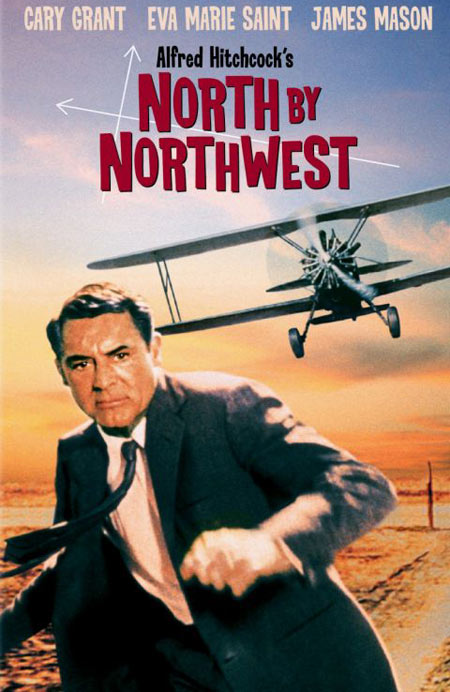
North By Northwest is a thriller that was produced and directed by Sir Alfred Hitchcock during 1959. The film follows the life of innocent Roger Thorhill who is mistaken for a secret spy named George Kaplan.


Throughout this film we see a number of high adrenaline action scenes that will leave you sitting on the edge of your seat through use of attention stealing suspense. The first major action scene will see in the film is when Roger is getting chased by Vandamm's people. During this scene we see Roger attempting to make a getaway from his kidnappers whilst intoxicated. When things take a turn for the worst, or for better in some aspects when Roger is pulled over and arrested by the police. Hitchcock created a huge amount of suspense throughout this scene as the audience pretty much had no idea what was going to happen. Was he going to drive of the edge of the cliff and fall to his death as the kidnappers planned? Or was he going to make an amazing getaway from the enemy?

Proceeding through the film we see Roger attempt to find this 'George Kaplan' in order to get answers on why he is being hunted. However, through this process we see that Roger is mistaken for murdering Townsend who was actually killed via a throwing knife from Valerian. Roger then goes on the run from the law, still attempting to find Kaplan. During a train journey we see him meet a lady who claims she will help him to meet Kaplan and arranges a meeting place for Roger to meet.


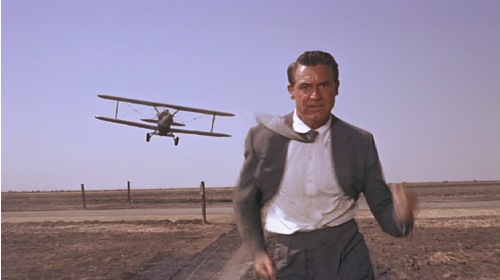
Thus bringing us on to the next scene, the crop-duster scene. This is arguably the best scene throughout the film. The scene builds up huge amounts of suspense for the audience as we do not know what this 'George Kaplan' looks like. As cars and buses pass, we are more and more attached to the screen as we desperately want to know what is going to happen to Thornhill. Will he be shot? Or will he finally meet Kaplan? Then we see a man getting dropped of in a car at the bus stop just across the road from Thornhill, we immediately then start to think that this is Kaplan, however we then realize that he is not. We then see the plane hurrying towards him, looking like a game of cat and mouse. Roger does everything he can to avoid death and stay hidden, then an oil tanker comes along which almost takes Roger out! The plane still hurrying towards him at this point smashes into the oil tanker resulting in a huge explosion. During the times when this film was recorder, explosions and stunts seen in this film would have been incredibly hard to perform. Lots of people liked the film as the stunts was of a very high standard, many of which hats would have rarely been used.

In the end we see the plot come clear, as the huge red herring is revealed. Personally I really like this film as throughout the film certain things happen that make you create your own perception of what is going on but then, get proved wrong at the end, as we see many interesting twists and the truth becomes clear.

Wednesday, 6 November 2013

Types of Thrillers.

Types of Thrillers

There are many different types of thrillers, such as action thrillers, crime thrillers, horror thrillers, techno-thrillers etc. All of these types of thrillers have there own aspects which make them what they are.

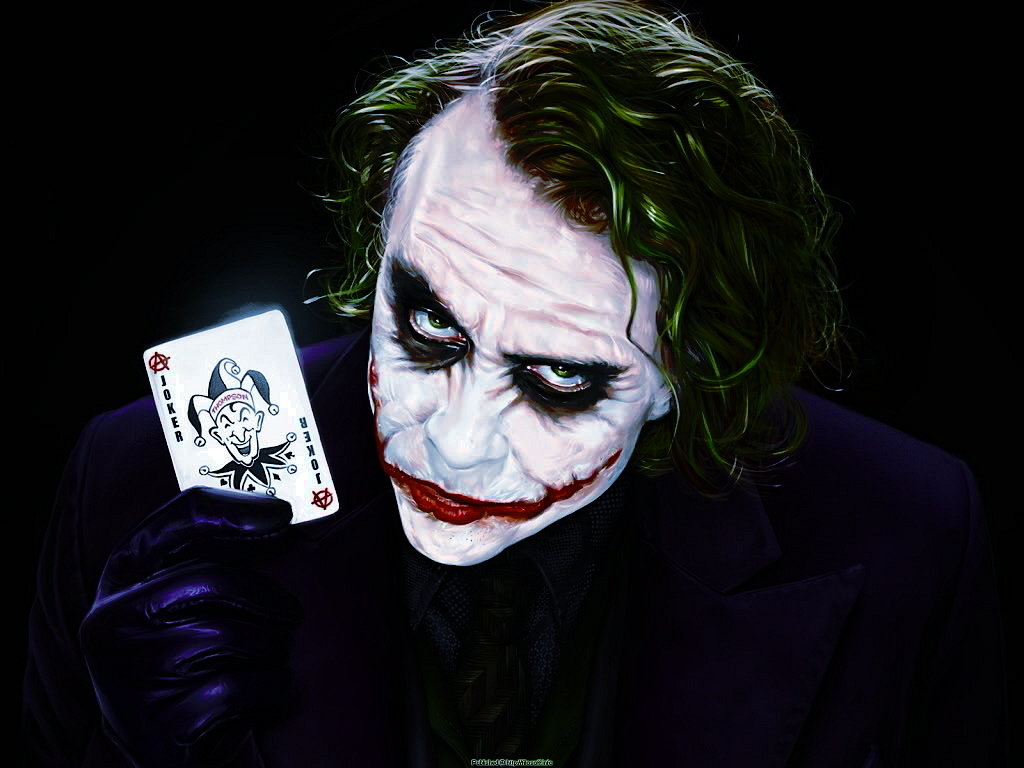
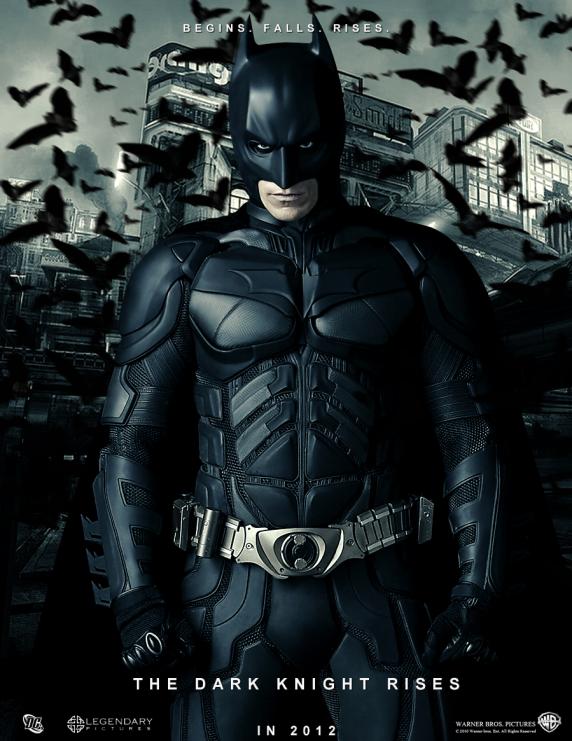
Action thrillers generally have a lot of violence within them and the plot is usually a race against time. They would include a lot of action/explosions, chase sense and a large amount of guns. The villain is also made obvious as to who it is but also involves elements of mystery. Some examples of action thriller are 'Batman: The Dark Knight' and 'Diehard'.


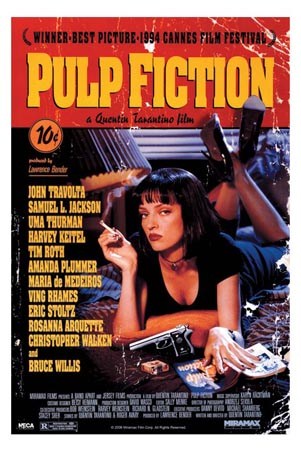
Crime thrillers are all about committing crime. They usually involve robbers, murderers, guns, shoot outs and kidnappings. Crime films usually emphasise actions. Some examples of of Crime thrillers are 'Pulp Fiction' and 'GoodFellas'.


Horror thrillers usually involve conflict with the main characters and the villain usually have the most power. Horror thrillers aim to scare the viewer and contain an element of suspense. Some examples of Horror thrillers are 'House of Wax' and 'Saw'.


Alfred Hitchcock.

Alfred Hitchcock

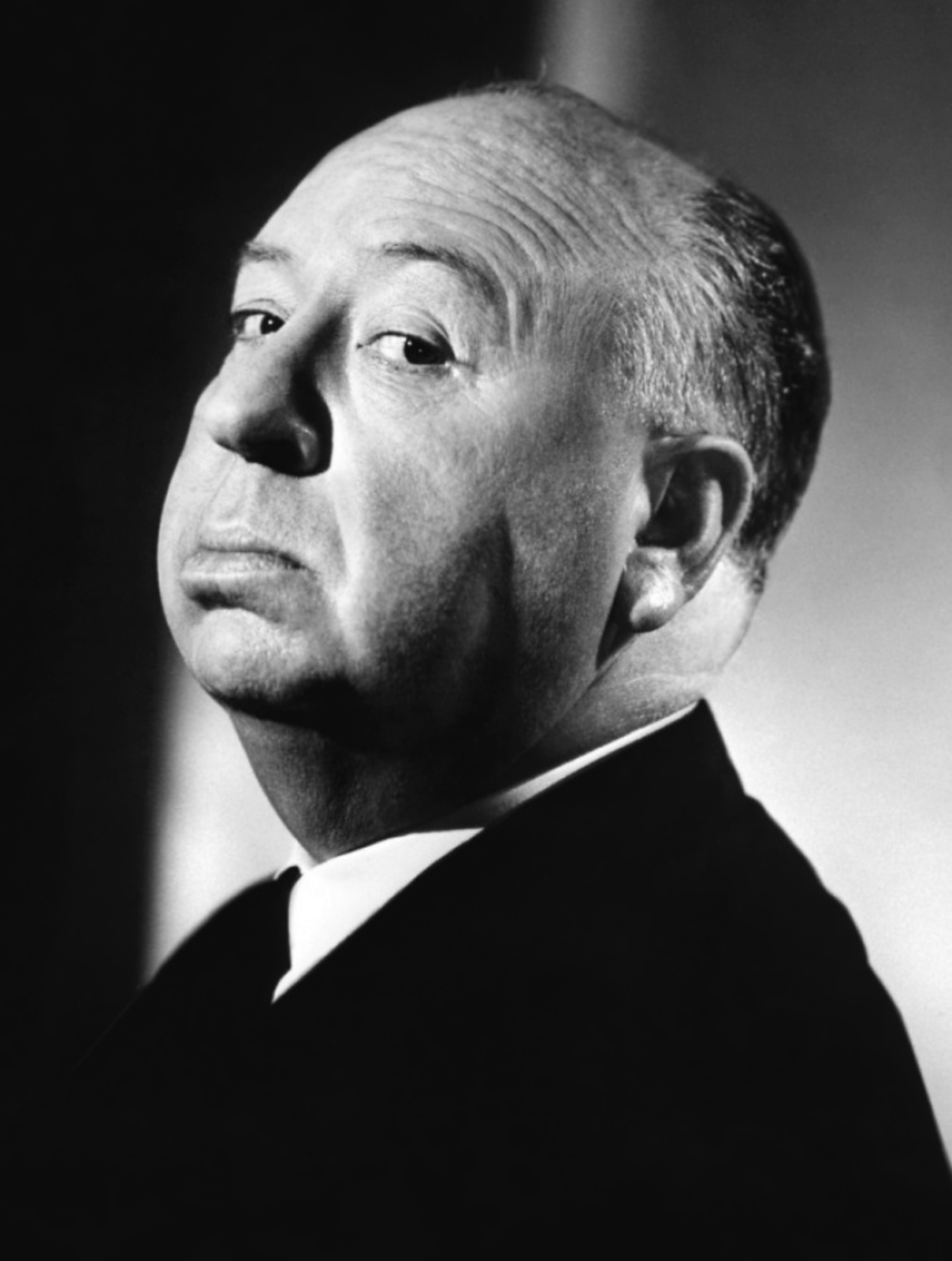
Sir Alfred Joseph Hitchcock was born on the 13th August 1899 and died at the age of 80 on the 29th April 1980. Sir Alfred was born in Leytonstone, Essex, England and died in California, USA. Sir Alfred was renowned as England's best director and and his career lasted over half a century! 

Sir Alfred was also known as 'the master of suspense' and when writing scripts for his films he payed a strict attention to detail. Some of Alfred's best known films include: Psycho, North by Northwest, Rear Window and Vertigo. Alfred won a number of awards throughout his directing career, receiving two golden globes, eight Laurel awards, and five lifetime achievement awards, as well as being nominated for a number of prestigious awards. Some people would argue that Alfred had a favourite actor, Clare Greet, as she appeared in 7 of Alfred's productions.


Hitchcock has his very own style of script writing and knew great ways to great suspense and action. In many of his films we see how he has used red herrings to dramatic effect and how he had tricked the viewer into thinking something completely different from the truth. He also knew ways on how to scare people too, for example, his film 'The Birds' on the movie premier night, as the audience was leaving the theatre, he had fake birds hiding in tress and speakers that would make loud bird noises as the audience was leaving. He once said "They like to put their toe in the cold water of fear."


Tuesday, 5 November 2013

Suspense and Shock.

Suspense and Shock

Shock: A sudden upsetting or surprising event or experience.
Suspense: A state or feeling of excited or anxious uncertainty about what may happen. 

In the film 'North by Northwest', an example of Shock would be when the crop duster plane was chasing Roger Thornhill, this is because as the viewer, you do not know what is about to happen.


In the film 'The Birds', an example of shock would be when Lydia finds a dead man with his eyes pecked out. You can clearly see the shock on her face and when the man is shown on camera, this may also shock the audience.


Lighting Exercise.


MacGuffin.

MacGuffin

A MacGuffin, also known/referred to as McGuffin or maguffin, is a plot device in the form of a goal or some kind of desired object in which the character is willing to do anything in his/her power to obtain.

The MacGuffin is commonly used in most films, especially thrillers. The MacGuffin is usually the main focus of the film in the beginning, the film may then play out with the MacGuffin coming back in focus towards the ending. However the MacGuffin may have been forgotten about by the end of the film.

Some examples of what a MacGuffin could appear as would be: money, love, glory, power, victory etc. For example, the MacGuffin in the film Titanic would be the 'Heart Of The Ocean' necklace.

Wednesday, 23 October 2013

Thrillers.

Thrillers.

What is a thriller?
A thriller is a broad genre of film which uses suspense, tension and excitement as some of the main elements in order to viewer’s mood by giving them high levels of anticipation, expectations, suspense, action, terror and anxiety. Some of the main sub-genres of thrillers include physiological, mystery and crime thrillers. A thriller will often use techniques such as red herrings and cliff hangers.

Some examples of modern thrillers:


What is a red herring?
A red herring is an idiom which creates a sense of deception and misleads the viewer as it makes you think that something may happen when in fact it does not. Red herrings also can lead you to a false conclusion and creates a huge element of surprise.

What is a cliff hanger?

A cliff hanger is a plot device used in order to get the viewer to return/continue watching as they are anxious to see what is going to happen. A cliff hanger could have the viewer in a sense of confusion and create high levels of anticipation.

Tuesday, 22 October 2013

Written Assessment - 'Meeting George'.

AS Media Studies - Written Assessment. 

Our story was about two mates in school going to meet up with 'George' in order to go to their next lesson. We used almost all of the shots asked except from the crane shot and the low angle shot. The reason we didn't use the crane shot is because it was virtually impossible, as we did not have a crane. We didn't use the low angle shot as we didn't feel that there was any parts within the film in which it would have fitted in well and served a good purpose. In out project we used the close up of Wesley when he was asking what room we was in to show the confusion of his character at the time. We also decided to use the long shot when the friends was walking across the school grounds as we felt this was the suitable shot to use as it showed the viewer where they was coming from and where they was going to. We used a extreme close up of the hand shake when Klaus and Wesley met to show their friendship. I feel that all of our choices were successful except for one, the tilt shot, as it didn't really stand any purpose and wasn't tilted to a full ninety-degree angle. During George's POV the shot was not held 100% steady. If we was to do this again we would use a dolly in order to keep the camera 100% steady, this would look more professional and would fit in better with the film. I feel that not all of the shots were in frame appropriately. This is as during the long shot you do not clearly see the exit in which the friends come from Also there is a lot of surrounding in the frame which serve no purpose and you can not clearly see the characters. If we had filmed this from a different angle and show where the friend come from and where the end up i feel this would look more professional. However where we filmed the shot from, this was the best place, as we didn't have access to the other parts of the school. I feel that we had a few very successful shots but if I had to choose one I would say that it has to be the extreme close up when Wesley and Klaus greet each other. The reason I feel this is the best element is because looks very good and is a good addition to the film. I feel we could make a few improvements within this film. The first improvement would be within the first shot (long shot). I would maybe change this to a PAN shot and the camera could follow Klaus through the gate and then got Wesley into the shot when they meet. However instead of changing the shot perhaps Klaus could have walked a bit faster so the viewer doesn't feel bored, as there isn't anything going on around him. Another shot I would choose to improve would be the tilt shot, this is as I feel that the tilt shot we used was pointless/served no purpose and wasn't very well shot. When editing the film, there were some places where we couldn't apply transitions although we would have liked to. I feel that the main thing that was done well during the editing was the audio. This is as when there is no verbal communication, the background music was loud, but when it came to the verbal communication the audio was lowered. Also during the volume changes, the volume was applies slowly and didn't just change from one set volume to another. 

Tuesday, 1 October 2013

Welcome!

Welcome!

Hello, my name is George Spence, and this is my Media Studies AS Blog.

Brief.

Brief.

The Brief. You have been asked to produce the titles and opening sequence of a new fiction film in the thriller genre. The sequence should last a maximum of two minutes. You may work in a group of 2 - 4 students. As acting is ...